Introduction
GLP-1 medications have gained significant attention in recent years because of their role in supporting weight management and metabolic health.
Many people are familiar with the commonly discussed effects, such as reduced appetite, improved blood sugar regulation, and changes in body weight.
However, there are also GLP-1 side effects nobody talks about that may influence daily comfort, lifestyle habits, and overall experience.
While GLP-1 medications can provide meaningful support for many individuals, understanding the complete picture is important. Every person may respond differently based on their body, health background, eating habits, activity levels, and consistency of use.

GLP-1 Side Effects Nobody Talks About include digestive changes, appetite shifts, energy fluctuations, and other lesser-known experiences during use.
Understanding potential experiences before starting a GLP-1 regimen can help individuals make informed wellness decisions. The lesser-known effects are not always negative. Some changes may simply reflect how the body is adapting to altered appetite signals, digestion patterns, and metabolic processes.
Being aware of these changes allows individuals to better manage their routines and recognize when professional guidance may be needed.
This article explores the GLP-1 side effects nobody talks about, including digestive changes, appetite-related experiences, energy fluctuations, emotional adjustments, and other factors that are often overlooked in general discussions.
What Are GLP-1 Medications?
GLP-1 medications are designed to mimic the activity of a naturally occurring hormone called glucagon-like peptide-1 (GLP-1). This hormone plays an important role in several metabolic processes, including appetite regulation, digestion, and glucose regulation.
When GLP-1 pathways are activated, they may influence how quickly food moves through the digestive system, how full a person feels after eating, and how the body responds to nutrients.
Many GLP-1 medications are used under medical supervision for specific health goals related to blood sugar management or weight-related concerns.
The way GLP-1 medications work involves several biological pathways:
- Supporting healthy appetite signaling
- Influencing feelings of fullness
- Helping regulate glucose response after meals
- Affecting digestive movement
- Supporting metabolic balance
GLP-1 medications do more than affect hunger; they influence several systems throughout the body.
Because these medications interact with the body’s natural processes, some people notice changes beyond the expected effects.
Why Are Some GLP-1 Side Effects Rarely Discussed?
Most conversations about GLP-1 medications focus on the most well-known effects, such as nausea or appetite suppression. However, individual experiences can include a wider range of changes.
Several reasons explain why certain effects receive less attention:
- Individual Body Responses: Every person has a unique digestive system, metabolism, and lifestyle pattern. A response that feels noticeable for one person may be minimal for another.
- Adjustment Period: Many experiences occur while the body adapts to changes in appetite signals and digestion speed.
- Lifestyle Changes: Reduced hunger may naturally alter eating patterns, meal timing, and nutrient intake, leading to additional effects.
- Different Expectations: Some individuals expect only weight-related changes and may not anticipate shifts in energy, digestion, or daily habits.
The body is a connected system, and changes in one area can influence other areas.
GLP-1 Side Effects Nobody Talks About
Changes in Food Preferences
One of the less-discussed experiences with GLP-1 medications is a change in food preferences.
Some individuals report that certain foods they previously enjoyed may become less appealing. Foods that are heavy, rich, or highly processed may no longer create the same desire.
This may happen because GLP-1 activity influences appetite signals and the brain’s response to food rewards.
Some people may notice:
- Reduced interest in specific foods
- Smaller portion preferences
- Changes in cravings
- Increased awareness of fullness
A changing relationship with food can be one of the most noticeable lifestyle adjustments.
For some individuals, this shift may make healthier eating patterns easier. However, others may need time to adjust to their new eating habits.
Feeling Full for Longer Periods
Extended feelings of fullness are often considered a benefit, but they can also require adjustment.
Because GLP-1 pathways may slow stomach emptying, some individuals experience a longer-lasting sensation of fullness after meals.
This may affect:
- Meal frequency
- Portion sizes
- Interest in snacks
- Eating schedules
While this can support reduced calorie intake, some people may find it challenging to consume enough nutrients if they are not intentionally planning balanced meals.
Eating less does not always mean meeting the body’s nutritional needs.
Including nutrient-dense foods with adequate protein, vitamins, and minerals can help support overall wellness.
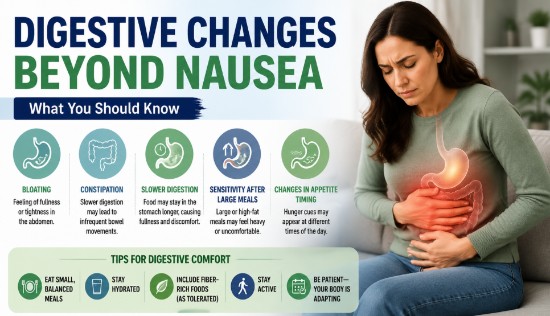
Digestive Changes Beyond Nausea
Nausea is commonly mentioned with GLP-1 medications, but other digestive experiences may occur.
Some lesser-discussed digestive changes include:
- Bloating: Changes in digestion speed may contribute to feelings of abdominal fullness or bloating.
- Constipation: Slower digestive movement may make bowel regularity a concern for some individuals.
- Changes in Appetite Timing: Some people may notice that hunger signals appear at different times throughout the day.
- Feeling Sensitive After Large Meals: Eating larger portions can cause discomfort as digestion patterns change.
Digestive adjustment is one of the most common areas where people notice changes.
Maintaining hydration, consuming fiber-rich foods when appropriate, and following healthcare guidance may help support digestive comfort.
Energy Level Fluctuations
Another topic that receives less attention is how GLP-1 medications may affect daily energy experiences.
Some individuals report feeling changes in energy levels, especially during the adjustment period.
Possible reasons include:
- Eating fewer calories than before
- Changes in meal composition
- Adaptation to new metabolic patterns
- Reduced intake of certain nutrients
Some people may feel more energetic as they develop healthier habits, while others may experience temporary tiredness.
Energy changes are often connected to overall nutrition and lifestyle balance.
Ensuring adequate protein intake, staying hydrated, and maintaining regular movement may support consistent energy levels.
Muscle and Strength Considerations
Weight changes involve more than changes in body fat. Maintaining muscle health is an important part of overall wellness.
When appetite decreases significantly, some individuals may unintentionally reduce protein intake. Without proper nutrition and physical activity, maintaining muscle strength may become more challenging.
Supportive habits may include:
- Prioritizing protein-rich meals
- Including resistance exercises when appropriate
- Maintaining regular physical activity
- Monitoring overall nutrient intake
Healthy weight management includes supporting body composition, not only focusing on the number on the scale.
Emotional and Lifestyle Adjustments
Changes in appetite and eating habits can sometimes create emotional adjustments that are not widely discussed.
Food is connected to many daily experiences, including celebrations, relaxation, social activities, and personal routines.
Some individuals may experience:
- Changes in enjoyment around meals
- Adjustments during social gatherings
- Different relationships with cravings
- New approaches to meal planning
These changes do not necessarily indicate a problem. They may simply represent adaptation to a different lifestyle pattern.
Changing eating habits can involve both physical and emotional adjustments.
Building supportive routines and maintaining a balanced mindset can help individuals navigate these changes.
Feeling Different During the Adaptation Period
The beginning phase of a GLP-1 journey may feel different as the body adjusts.
Some people notice temporary changes such as:
- Altered hunger patterns
- Different digestion experiences
- Changes in meal satisfaction
- Shifts in daily routines
The adjustment period varies from person to person.
Factors that may influence individual experiences include:
- Dosage changes
- Personal metabolism
- Eating habits
- Activity levels
- Overall health status
Patience and consistency are important during periods of adjustment.
Changes in Hydration Needs
Reduced appetite may sometimes lead individuals to drink less because they are consuming less food overall.
Since hydration plays a role in digestion, energy, and overall wellness, maintaining adequate fluid intake is important.
Signs that hydration habits may need attention can include:
- Dry mouth
- Low energy
- Reduced fluid intake
- Digestive discomfort
Making hydration part of a daily routine can support overall comfort.
The Importance of Nutrient Awareness
One of the most overlooked aspects of GLP-1 use is ensuring nutritional quality.
When appetite decreases, food choices become even more important.
A balanced approach may include:
- Quality protein sources
- Fiber-rich foods
- Essential vitamins and minerals
- Healthy fats
- Adequate fluids
Smaller meals should still provide meaningful nutrition.
Focusing only on eating less may overlook the importance of nourishing the body.
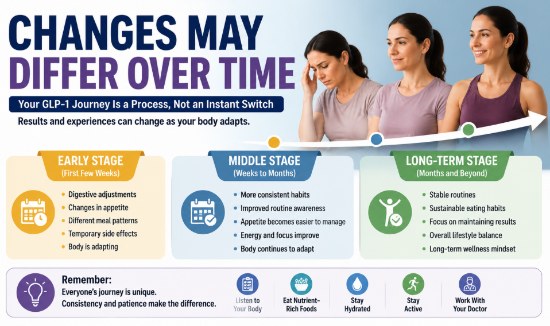
Changes May Differ Over Time
GLP-1 experiences are not always the same throughout the entire journey.
Some individuals notice stronger effects during the beginning phase, while others experience gradual changes.
Over time, the body may adapt to new appetite signals and routines.
Possible changes throughout different stages may include:
Early Stage
- Digestive adjustments
- Appetite changes
- Meal pattern changes
Middle Stage
- More consistent eating habits
- Improved routine awareness
- Lifestyle adaptation
Long-Term Stage
- Continued focus on balanced nutrition
- Maintenance strategies
- Sustainable wellness habits
A long-term approach often requires more than medication alone.
How to Support Comfort During a GLP-1 Journey
While individual experiences vary, certain healthy habits may support overall wellness.
Focus on Balanced Meals
Choosing nutrient-rich foods can help provide essential support even when appetite changes.
Eat Slowly
Taking time during meals may help the body recognize fullness signals more comfortably.
Stay Hydrated
Adequate fluid intake supports many important body functions.
Maintain Movement
Regular physical activity can support strength, mobility, and overall wellness.
Communicate With Healthcare Professionals
Discussing changes or concerns with a qualified healthcare provider can help ensure appropriate support.
Who Should Pay Attention to GLP-1 Side Effects?
Anyone considering or currently using GLP-1 medications should understand how their body responds.
Extra attention may be useful for individuals who experience:
- Significant digestive discomfort
- Difficulty maintaining nutrition
- Major energy changes
- Unusual physical symptoms
Listening to the body is an important part of responsible wellness management.
Final Thoughts
GLP-1 medications have become an important topic in metabolic health discussions, but the conversation often focuses only on the most familiar effects. The GLP-1 Side Effects Nobody Talks About include a broader range of experiences involving digestion, food preferences, energy patterns, nutrition, and lifestyle adjustments.
These experiences can vary greatly between individuals. Some changes may become positive parts of a healthier routine, while others may require attention and support.
Understanding the complete picture helps people approach GLP-1 options with realistic expectations and greater awareness.
A successful wellness journey involves more than weight change; it also supports overall health, nutrition, and daily quality of life.
References
https://en.wikipedia.org/wiki/Glucagon-like_peptide-1
https://www.mayoclinic.org/healthy-lifestyle/weight-loss/in-depth/weight-loss/art-20044318
https://pmc.ncbi.nlm.nih.gov/articles/PMC5497590/
.